Lester F. Larsen Tractor Test and Power Museum
June 2024 Location of Interest
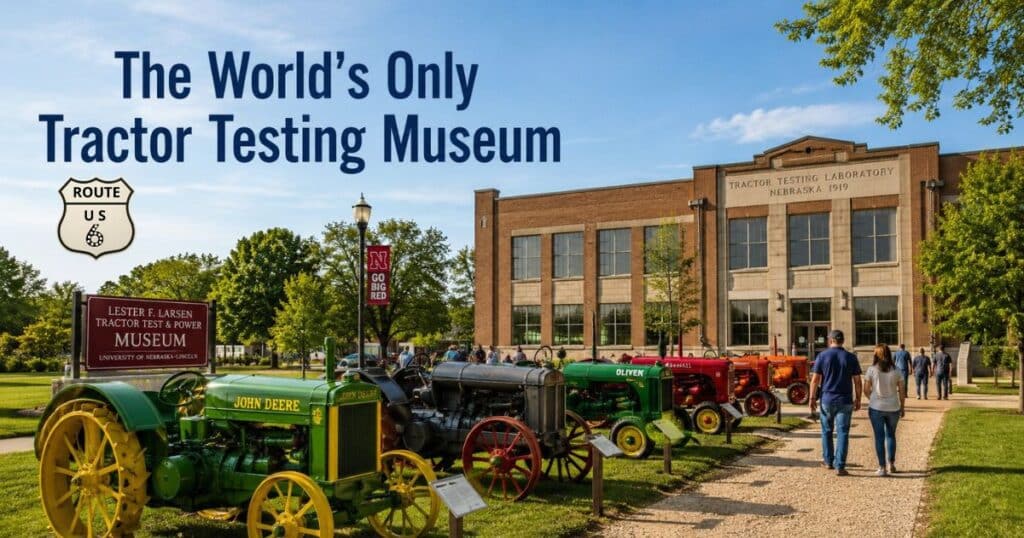
The Lester F. Larsen Tractor Test and Power Museum is more than a collection of historic machinery. Travelers along US Route 6 quickly discover that some of America’s most memorable destinations are not always the largest or most famous attractions. Sometimes the places that leave the strongest impression are the hidden gems that tell an important story about everyday life, innovation, and the people who helped shape the nation. In Lincoln, Nebraska, one such place stands quietly on the East Campus of the University of Nebraska-Lincoln. It is a remarkable tribute to agricultural progress, engineering ingenuity, and consumer protection that helped transform farming across the United States.
The Origins of Tractor Testing in America
Housed inside the original 1919 Nebraska Tractor Test Laboratory building, the museum is recognized as the world’s only tractor testing museum. For road trippers exploring Nebraska along US Route 6, it offers an experience unlike any other. Families, history enthusiasts, classic tractor fans, and curious travelers alike will find themselves drawn into a story that stretches from the early days of mechanized farming to the modern agricultural technologies that continue to shape rural America today.
How Nebraska Changed Agricultural Consumer Protection
The museum’s roots trace back to a time when tractors were rapidly replacing horses on American farms. During the early twentieth century, farmers faced a major problem. Tractor manufacturers often made exaggerated claims about horsepower and performance, leaving buyers uncertain about whether expensive equipment would actually perform as advertised. In response, Nebraska passed the Nebraska Tractor Test Law in 1919, requiring all tractors sold in the state to undergo standardized testing at the University of Nebraska. The goal was simple but groundbreaking: protect farmers by providing accurate, reliable information before they made a purchase.
Walking Through a Timeline of Farm Innovation
That legislation changed agricultural history. The Nebraska Tractor Test Laboratory became the first facility in the nation dedicated to independent tractor testing, setting standards that would influence the entire agricultural equipment industry. Farmers from across the country began relying on the published test results, and manufacturers soon recognized that passing Nebraska’s tests became essential for building trust with customers. The museum today preserves that legacy while giving visitors an up close look at how these tests shaped the evolution of farming technology.
Walking through the museum feels like stepping into a living timeline of agricultural innovation. Antique tractors line the galleries, each representing a different chapter in America’s farming story. Visitors can see massive steel wheeled machines from the early days of mechanization alongside streamlined mid century models that introduced greater efficiency and comfort to the farm. Some tractors appear rugged and industrial, while others reflect the optimism and engineering creativity of their era. Together, they tell a story of persistence, experimentation, and progress.
Understanding Agricultural Mechanization and Engineering
One of the most fascinating aspects of the museum is its emphasis on the relationship between technology and daily life. For many families across the Midwest and Great Plains, tractors were more than machines. They represented survival, independence, and opportunity. Mechanized farming reduced physical labor, increased productivity, and allowed farms to expand operations in ways that were once unimaginable. The museum captures that transformation beautifully, connecting the machinery to the people who depended on it.
Exploring the Original 1919 Testing Laboratory
The building itself is also part of the attraction. Because the museum occupies the original Nebraska Tractor Test Laboratory structure, visitors are standing in a place where history actually happened. The testing bays and industrial architecture provide a tangible connection to the past. It is easy to imagine engineers carefully recording measurements while farmers waited anxiously to see whether a tractor could live up to its claims. That authentic setting gives the museum a character that cannot be recreated elsewhere.
Beyond the tractors themselves, exhibits throughout the museum explore broader themes of agricultural mechanization and consumer advocacy. Displays explain how testing procedures worked and why standardized evaluations became so important. For younger visitors, the museum offers an educational opportunity to better understand how farming technology evolved over the last century. Many children who visit leave with a newfound appreciation for the machines that helped feed the nation.
Celebrating Nebraska’s Agricultural Heritage
The Lester F. Larsen Tractor Test and Power Museum also serves as a reminder of Nebraska’s deep agricultural heritage. Agriculture has long been central to the state’s economy and identity, and this museum highlights Nebraska’s important contribution to national farming standards. Travelers following US Route 6 through the Cornhusker State will discover that this stop provides meaningful context for the rural landscapes, grain elevators, and farming communities they encounter along the highway.
Planning Your Visit to the Museum
Visitors planning a stop at the museum will find it conveniently located on the East Campus of the University of Nebraska-Lincoln at 35th and Fair Streets in Lincoln. The museum is generally open weekdays during regular business hours, though visitors are encouraged to check current schedules before traveling, particularly during university holidays or special events. Admission is free, making it an easy and affordable addition to any Nebraska road trip itinerary.
Exploring Lincoln Beyond the Museum
Lincoln itself offers plenty of opportunities to extend the experience. After exploring the museum, travelers can enjoy nearby restaurants, parks, and additional cultural attractions throughout the city. The university campus provides a pleasant setting for a leisurely walk, while downtown Lincoln offers historic architecture, local dining, and welcoming Midwestern hospitality. For families traveling along US Route 6, the museum pairs especially well with a broader exploration of Nebraska’s history and culture.
Why This Museum Leaves a Lasting Impression
What makes the Lester F. Larsen Tractor Test and Power Museum especially memorable is the way it combines engineering, history, and human stories into one engaging experience. Even visitors with little prior interest in tractors often leave impressed by the museum’s unique mission and historical significance. The idea that one state law from 1919 could influence farming practices around the world is both surprising and inspiring.
A Meaningful Stop Along US Route 6
Along US Route 6, travelers often search for destinations that feel authentic and connected to the communities around them. This museum delivers exactly that kind of experience. It is a place where innovation met accountability, where science served everyday people, and where agricultural history comes vividly to life. For anyone exploring Nebraska’s portion of US Route 6, the Lester F. Larsen Tractor Test and Power Museum stands as a worthwhile stop that offers both education and genuine appreciation for the ingenuity that helped power rural America forward.
Subscribe today and let Route 6 come to you, one story at a time.