The Evolution of US Route 6 History: America’s Cross-Country Connector
A Modest Beginning in 1926
U.S. Route 6, established in November 1926 as part of the original U.S. Numbered Highway System, has a fascinating history that reflects the evolving landscape of American transportation. At its inception, this highway was far more modest than the transcontinental route travelers recognize today.
Originally, U.S. Route 6 stretched from Provincetown, Massachusetts, at the very tip of Cape Cod, westward to Brewster, New York. This early alignment formed a relatively short eastern corridor, linking coastal communities with inland New England and the lower Hudson Valley. It served as a practical regional route, facilitating commerce, tourism, and everyday travel in a time when long-distance highway systems were still taking shape.
Even in this early phase, the road hinted at something greater. Its placement through historically rich and economically active areas made it a natural candidate for expansion as America’s highway ambitions grew.
Expanding Across a Nation
Throughout the late 1920s and 1930s, U.S. Route 6 underwent a dramatic transformation. As demand increased for reliable cross-country travel routes, the highway was steadily extended westward, absorbing portions of existing roads and newly developed segments.
By 1937, U.S. Route 6 had achieved a remarkable milestone. It stretched all the way to Long Beach, California, becoming one of the longest continuous highways in the United States. This expansion turned what had once been a regional road into a true coast-to-coast artery.
The significance of this growth cannot be overstated:
- National Connectivity: Route 6 linked the Atlantic and Pacific coasts, connecting small towns, major cities, and vast rural landscapes.
- Economic Impact: It supported trade and tourism, enabling goods and travelers to move efficiently across regions.
- Cultural Exchange: The highway became a pathway for shared experiences, carrying stories, traditions, and people across the country.
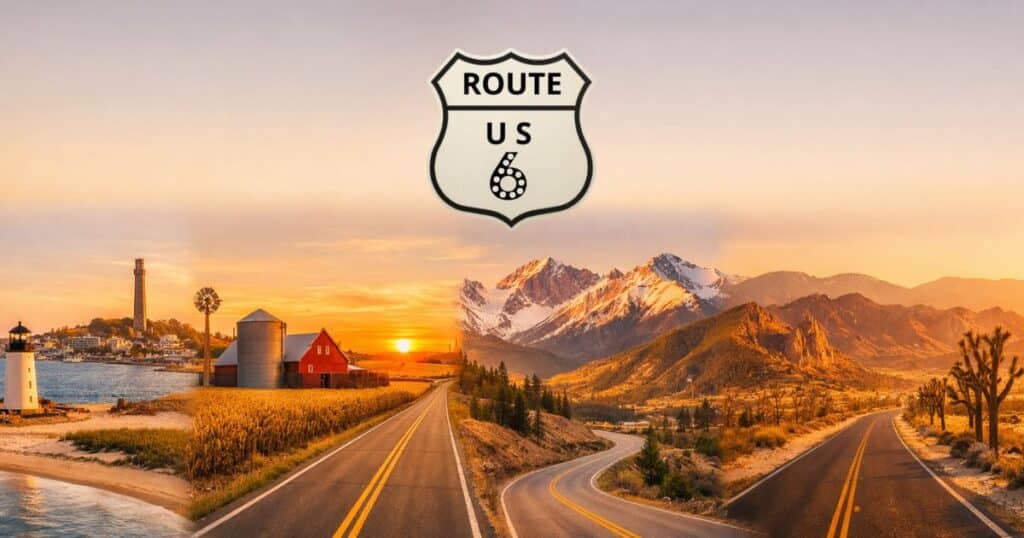
Travelers along U.S. Route 6 could experience an extraordinary range of scenery, from the beaches of Massachusetts to the farmlands of the Midwest, the Rocky Mountains of Colorado, and the deserts of California.
The Grand Army of the Republic Highway
U.S. Route 6 carries a distinguished and meaningful nickname: The Grand Army of the Republic Highway.
This designation honors the Grand Army of the Republic, a fraternal organization composed of Union veterans of the American Civil War. In the mid-20th century, efforts were made to commemorate these veterans through national landmarks and memorials.
Assigning this name to U.S. Route 6 served several purposes:
- National Tribute: It created a living memorial stretching across multiple states.
- Historical Recognition: It ensured that the sacrifices of Union soldiers remained visible to future generations.
- Symbolic Unity: The highway itself became a representation of a reunited nation, connected from coast to coast.
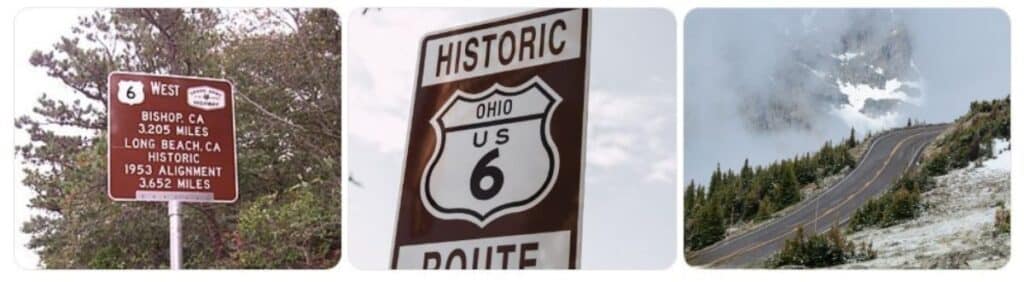
Even today, travelers may encounter markers and signs along the route that preserve this legacy.
The 1964 Truncation and Its Impact
In 1964, significant changes came to U.S. Route 6, particularly in California. As part of a broader restructuring of the state’s highway system, the western terminus of Route 6 was moved from Long Beach to Bishop, California.
This truncation shortened the highway and removed its direct connection to the Pacific Ocean. The implications were notable:
- Shift in Traffic Patterns: Travelers heading to coastal Southern California increasingly relied on newer interstate highways.
- Changing Travel Experience: The route became less of a coast-to-coast journey in practical terms, though its historical identity remained.
- Tourism Adjustments: Communities along the former western segments adapted as traffic patterns evolved.
Despite this change, U.S. Route 6 retained its importance as a historic and scenic route, particularly through the American West.
A Living Legacy
Today, U.S. Route 6 stands as more than just a highway. It is a living timeline of American travel, reflecting nearly a century of growth, adaptation, and cultural connection.
From its beginnings as a short New England route to its peak as a transcontinental highway, and through its later modifications, Route 6 continues to inspire travelers who seek a deeper connection to the nation’s past.
For those who follow its path today, the journey offers more than miles. It offers a story woven through landscapes, communities, and generations.
Subscribe Today
Join fellow travelers, history lovers, and Route 6 supporters by signing up for the free Route 6 Happenings newsletter.It is your front row seat to the stories, destinations, and adventures waiting along US Route 6 . Subscribe