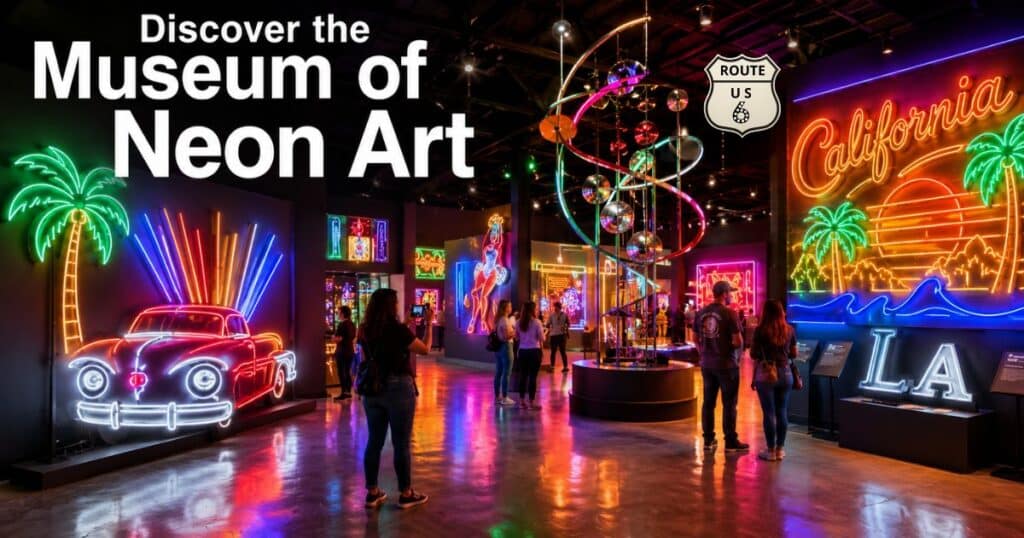
Discover the Museum of Neon Art in Glendale, California
Southern California is known for colorful attractions, creative communities, historic architecture, and memorable roadside landmarks. Few destinations bring those qualities together as brilliantly as the Museum of Neon Art in Glendale, California.
Better known as MONA, the Museum of Neon Art invites visitors to experience a glowing collection of historic signs, electric artwork, and kinetic creations. Located at 216 South Brand Boulevard in downtown Glendale, this distinctive cultural attraction preserves an important part of Southern California’s artistic and commercial history.
A Museum Where Art and Technology Meet
The Museum of Neon Art explores the connection between artistic expression, science, technology, and community history.
Its mission is to illuminate the past, present, and future by collecting and exhibiting electric and kinetic artwork as well as historic neon signs. The museum also helps preserve the handmade craft of neon fabrication by teaching visitors about the techniques used to create these glowing works.
Neon signs are often remembered as advertisements for restaurants, theaters, hotels, stores, and roadside businesses. At MONA, visitors are encouraged to see them from another perspective.
Each sign represents a combination of graphic design, skilled craftsmanship, electrical technology, and local history. Letter shapes, colors, animated elements, and decorative details reveal how businesses once competed for the attention of people passing along busy streets.
Explore Historic Neon Signs
The museum’s historic signs provide a colorful look at the visual character that once defined communities throughout Los Angeles County and Southern California.
These signs are more than commercial objects. They are surviving pieces of neighborhood history. Many represent businesses, entertainment venues, and gathering places that once played an important role in daily community life.
By collecting, restoring, and displaying historic neon, MONA helps keep those stories visible. The museum has grown from an effort started by two artists with discarded signs into an institution devoted to preserving and celebrating the neon heritage of Los Angeles.
Visitors who enjoy roadside history, vintage design, photography, advertising, architecture, or Americana will find plenty of fascinating details throughout the collection.
Discover Electric and Kinetic Fine Art
Historic signage is only one part of the Museum of Neon Art experience.
The museum also exhibits contemporary electric and kinetic fine art. These works demonstrate how artists use light, electricity, motion, glass, and technology to create visually engaging experiences.
Some artworks glow steadily, while others appear to move, flash, change, or respond through mechanical elements. The combination of illumination and motion creates a gallery experience that feels very different from visiting a traditional art museum.
The changing light encourages visitors to slow down and notice how color, shape, movement, and reflections transform the surrounding space.
Learn How Neon Art Is Made
Every traditional neon sign begins with skilled hands.
Glass tubes must be carefully heated, bent, shaped, assembled, filled with gas, and connected to electrical components. Even a simple letter requires precision and an understanding of both artistic design and technical construction.
MONA’s educational mission helps visitors understand this craftsmanship. Its programs connect neon art with science, technology, community, and creative expression.
Learning how these signs are made can give visitors a greater appreciation for the work displayed throughout the museum. What might appear to be a simple glowing line is actually the result of planning, patience, specialized knowledge, and years of practice.
A Colorful Stop for Many Interests
The Museum of Neon Art can appeal to a wide range of visitors.
Art enthusiasts can study the use of color, typography, motion, and space. History lovers can explore signs connected to Southern California’s commercial and cultural past. Photographers can discover unusual compositions, reflections, and illuminated details. Families can introduce younger visitors to the connections between science and art.
The museum is also an excellent destination for travelers interested in vintage roadside culture. Neon signs once welcomed motorists to motels, diners, theaters, service stations, and roadside attractions across the country. Preserving those signs helps tell the broader story of American travel.
Add MONA to Your California Travel Plans
The Museum of Neon Art offers a memorable alternative to the larger attractions usually associated with Los Angeles County.
Its downtown Glendale location makes it possible to combine a museum visit with local dining, shopping, architecture, and other nearby cultural destinations. The museum can be enjoyed as a focused stop during a Southern California road trip or as part of a full day exploring Glendale and the surrounding Los Angeles area.
For travelers following the story of historic US Route 6 through California, MONA provides an opportunity to explore the visual culture that helped define twentieth-century roadside travel.
Plan Your Visit
The Museum of Neon Art is located at:
216 S. Brand Blvd.
Glendale, CA 91204
The museum’s currently published hours are:
- Thursday: Noon to 7:00 p.m.
- Friday: Noon to 7:00 p.m.
- Saturday: Noon to 7:00 p.m.
- Sunday: Noon to 5:00 p.m.
MONA is closed on most major holidays. Hours, admission prices, programs, and exhibitions can change, so visitors should confirm current information with the museum before traveling.
Let Neon Light Up Your Journey
The Museum of Neon Art preserves much more than colorful signs. It protects examples of craftsmanship, artistic innovation, community identity, and roadside history.
Whether you are interested in art, technology, local history, photography, or distinctive travel experiences, MONA offers an attraction unlike a conventional museum.
Add the Museum of Neon Art to your Southern California itinerary and discover a place where history continues to glow.
Subscribe today and let Route 6 come to you, one story at a time.
FOLLOW US


