How US Route 6 Became the Grand Army of the Republic Highway
US Route 6 is more than a highway connecting communities across America. It is also a living memorial to the Union soldiers, sailors and Marines who served during the Civil War.
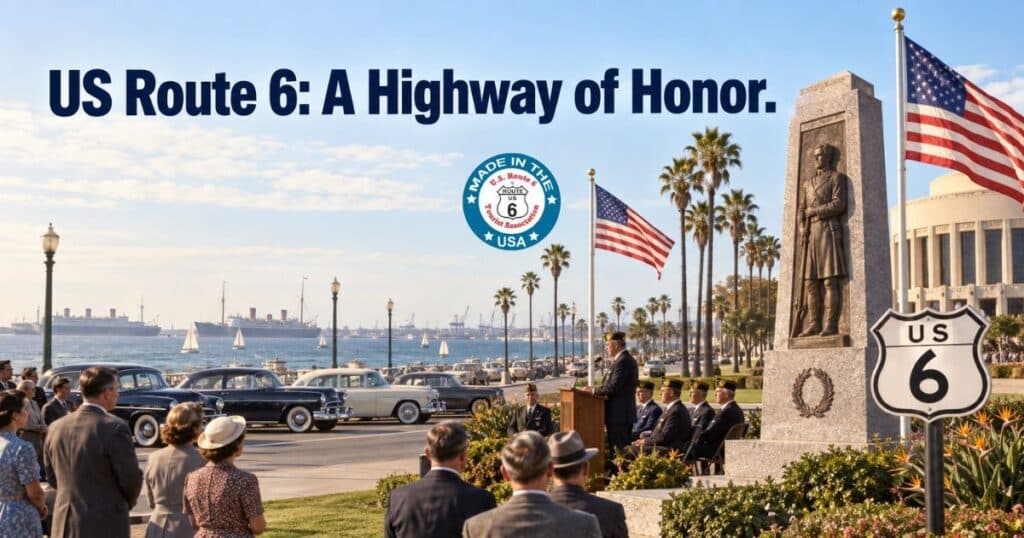
On May 3, 1953, the highway was formally dedicated in Long Beach, California, as the Grand Army of the Republic Highway. At the time, US Route 6 extended from Provincetown, Massachusetts, to Long Beach, creating a coast-to-coast memorial that crossed 14 states.
The Federal Highway Administration confirms that the formal dedication took place in Long Beach on May 3, 1953. The ceremony included five organizations connected with Civil War veterans and concluded with the placement of a commemorative monument near the city’s Municipal Auditorium.
AARoads summarizes the historic occasion this way:
“The highway was formally dedicated at the Long Beach end on May 3, 1953.”
The Idea Behind the Historic Name
The effort to name US Route 6 after Civil War veterans began nearly two decades before the national dedication.
Major William L. Anderson Jr. of the United States Army proposed designating US Route 6 as the Grand Army of the Republic Highway. His goal was to create a lasting tribute to the Union forces who served during the Civil War.
The Sons of Union Veterans of the Civil War began promoting Anderson’s proposal in April 1934. Because individual states controlled their sections of the highway, each state had to approve the honorary designation separately.
Massachusetts Led the Way
Massachusetts became the first state to officially adopt the Grand Army of the Republic Highway name.
On February 12, 1937, Massachusetts Governor Charles F. Hurley signed legislation applying the historic name to the state’s section of US Route 6. The date was especially meaningful because it was Abraham Lincoln’s birthday.
Other states gradually followed Massachusetts. California adopted the name in 1943, Indiana acted in 1946 and Pennsylvania designated its portion in 1948.
These individual state actions helped turn Anderson’s idea into a national memorial extending across the country.
The Coast-to-Coast Dedication of 1953
By 1953, the states along US Route 6 had adopted the Grand Army of the Republic Highway designation. The formal dedication on May 3 brought the individual state efforts together into one coast-to-coast tribute.
A monument installed in Long Beach marked the western end of the highway. Its inscription recognized the courage and sacrifice of the Union soldiers, sailors and Marines who gave their lives during the Civil War. It also credited Major William L. Anderson Jr. with first proposing the national memorial highway.
The dedication gave US Route 6 a historical identity that extended beyond transportation. Travelers were not simply following a highway. They were traveling along a memorial connecting states, communities and generations.
A Highway Built on Remembrance
The Grand Army of the Republic was a national organization formed by veterans who served in the Union Army, Navy and Marine Corps during the Civil War.
Naming US Route 6 in their honor helped preserve the memory of their service while creating a visible memorial across America. Unlike a monument standing in a single park or community, this memorial highway passed through cities, small towns, farming regions, mountains and deserts.
Every state along the highway became part of that shared remembrance.
The Highway Has Changed, but Its Heritage Remains
The route looked different in 1953 than it does today.
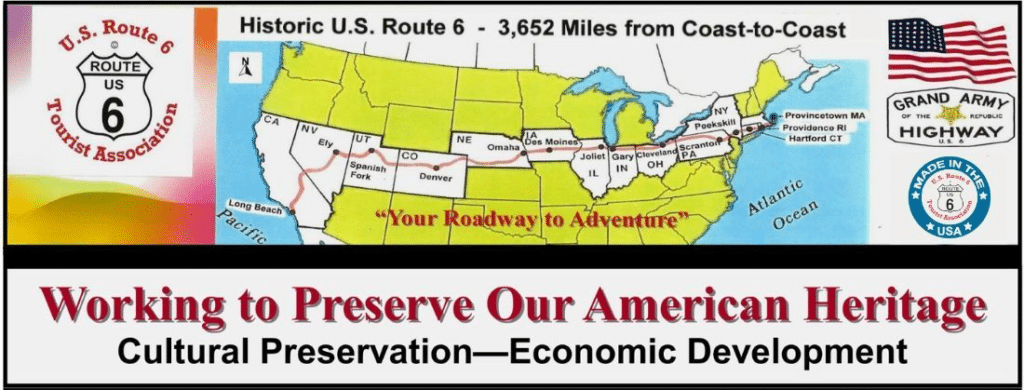
During the dedication era, US Route 6 extended approximately 3,652 miles from Provincetown to Long Beach. California shortened the official route in 1964, moving its western terminus to Bishop. US Route 6 then became the country’s second-longest numbered highway, behind US Route 20.
Although the official western terminus changed, the historic alignment to Long Beach remains an important part of the highway’s story. The location of the 1953 dedication continues to connect Southern California with the national history of the Grand Army of the Republic Highway.
Why the 1953 Dedication Still Matters
The Grand Army of the Republic Highway designation gives travelers an opportunity to explore more than scenery and roadside attractions.
It connects people with American history, the experiences of Civil War veterans and the communities that helped preserve the highway’s commemorative identity.
Historic signs, monuments, museums, veterans memorials and community stories found along US Route 6 help keep that legacy alive. Preserving them allows future generations to understand why this highway received such an important name.
Remembering the Grand Army of the Republic Highway
The May 3, 1953, dedication represented the completion of an effort that began with one person’s idea in 1934.
Major William L. Anderson Jr. imagined a highway that would honor the Union veterans of the Civil War. Massachusetts took the first official step in 1937. Other states followed, and the formal dedication in Long Beach transformed US Route 6 into a coast-to-coast memorial.
Today, every journey along historic US Route 6 provides another opportunity to remember the people, places and events that shaped America.
As travelers explore the highway, they also help preserve the enduring story of the Grand Army of the Republic Highway.
Help Preserve the History of US Route 6
The US Route 6 Tourist Association works to promote, preserve and share the history of this remarkable American highway.
You can support that mission by exploring US Route 6 communities, visiting local museums, sharing the highway’s stories and supporting preservation efforts.
Plan your next journey, discover the history and help keep the legacy of US Route 6 alive.
Visit the US Route 6 Tourist Association
Subscribe today and let Route 6 come to you, one story at a time.
FOLLOW US


