Before You Visit Topaz, Start at the Museum
There are places along US Route 6 that offer scenic beauty, roadside nostalgia, and unforgettable meals. Then there are places that ask something deeper of you. The Topaz Museum is one of those places.
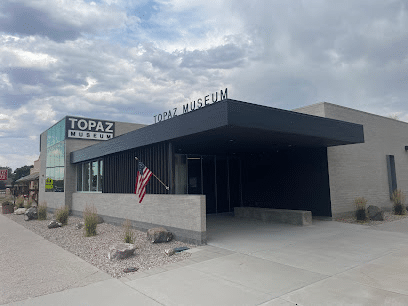
Tucked into the quiet farming community of Delta, the museum does not overwhelm you when you first arrive. The building sits modestly along Center Street, surrounded by the calm pace of small town Utah life. But once you walk through the doors, the experience changes you.
Before visiting the former Topaz War Relocation Center site several miles away, this museum is essential. Not recommended. Not optional. Essential.
Without it, the desert remains mostly silent.
With it, every stretch of windblown ground begins to speak.
The Museum That Gives Topaz Its Human Voice
The Topaz Museum preserves the stories of more than 11,000 Japanese Americans who were forcibly removed from their homes during World War II and incarcerated in the remote Utah desert. Families came primarily from the San Francisco Bay Area, carrying only what they could bring. Businesses were abandoned. Homes were lost. Lives were interrupted by fear, suspicion, and wartime policy.
Inside the museum, history stops feeling abstract.
Photographs line the walls with faces that feel immediate and personal. Schoolbooks, clothing, handmade furniture, letters, identification tags, and household items reveal how ordinary families tried to build fragments of normal life under extraordinary circumstances.
One exhibit features artwork and carvings created by incarcerees using whatever materials they could find in camp. Scrap wood became beauty. Harsh surroundings became canvases. Creativity became resilience.
Another section reconstructed a barracks room. Sparse. Cramped. Functional. Standing there, you begin to understand what words like “incarceration” and “relocation” can sometimes hide. The room was not simply historical context. It was evidence of endurance.
The museum also does something equally important. It restores identity to people who were too often reduced to statistics.
You see children smiling in school photos. Parents trying to maintain dignity. Young men serving in the military while their families remained imprisoned behind barbed wire. These stories transform history from distant textbook material into something deeply human.
Why the Museum Matters Before the Camp
The former camp site itself is quiet.
Very quiet.
The Utah desert stretches outward beneath an enormous sky. Wind moves across the landscape. Foundations and markers remain, but much of the physical camp is gone. Time and weather have reclaimed the space.
If you go there first without understanding the stories, you risk seeing only emptiness.
The museum changes that completely.
By the time you drive out toward the former camp, you no longer see empty land. You imagine rows of barracks. Laundry lines moving in the wind. Children walking to school. Dust storms sweeping through cracks in poorly insulated walls. Families trying to celebrate holidays and preserve traditions under impossible circumstances.
The museum gives emotional dimension to the landscape.
It teaches visitors not only what happened, but how people survived it emotionally, culturally, and spiritually.
That context matters.
Standing at the camp site after visiting the museum, you find yourself paying attention to small things. The distance from town. The isolation. The silence. Remember to thing about how difficult winter nights must have been there, and how relentless the summer dust storms probably felt. Without the museum, you never understand the weight of that environment.
A Stop That Encourages Reflection
What impressed me most was the museum’s tone.
It does not rely on anger or spectacle. Instead, it invites reflection. The exhibits are thoughtful, carefully researched, and deeply respectful toward the people whose lives were disrupted by incarceration.
For families traveling US Route 6, the museum offers an important educational opportunity for younger generations. For history enthusiasts, it provides a detailed and emotionally grounded account of a difficult chapter in American history. For road trippers simply exploring Utah, it becomes one of those unexpected places that lingers in your memory long after the trip ends.
The experience also carries lessons that still resonate today about citizenship, fear, prejudice, resilience, and constitutional rights.
That is part of what makes the museum so powerful. It is not frozen in the past. It quietly asks visitors to think about the present too.
Planning Your Visit
Topaz Museum
- Address: 55 West Center Street, Delta, Utah
- General Hours: Typically Tuesday through Saturday during daytime hours. Visitors should check current seasonal schedules before traveling.
- Location: Conveniently accessible for travelers exploring western Utah and US Route 6.
The museum staff and volunteers are passionate about preserving these stories, and their dedication is evident throughout every exhibit and display.
After visiting the museum, take the short drive to the former camp site. The combination of both experiences creates a fuller understanding than either could alone.
Final Thoughts
Some destinations entertain you. Others educate you.
The Topaz Museum does something more lasting.
It helps you remember.
Not just dates or facts, but people.
It reminds us that history happened to individuals with names, dreams, families, and futures. Visiting the museum before the camp transforms the experience from sightseeing into understanding.
If your travels along US Route 6 bring you anywhere near Delta, Utah, make time for this stop. Walk through the exhibits slowly. Read the stories carefully. Then drive out into the desert carrying those voices with you.
You will see the landscape differently afterward.
Subscribe today and let Route 6 come to you, one story at a time.