The Grand Army of the Republic Highway: Honoring Civil War Veterans Along Historic US Route 6
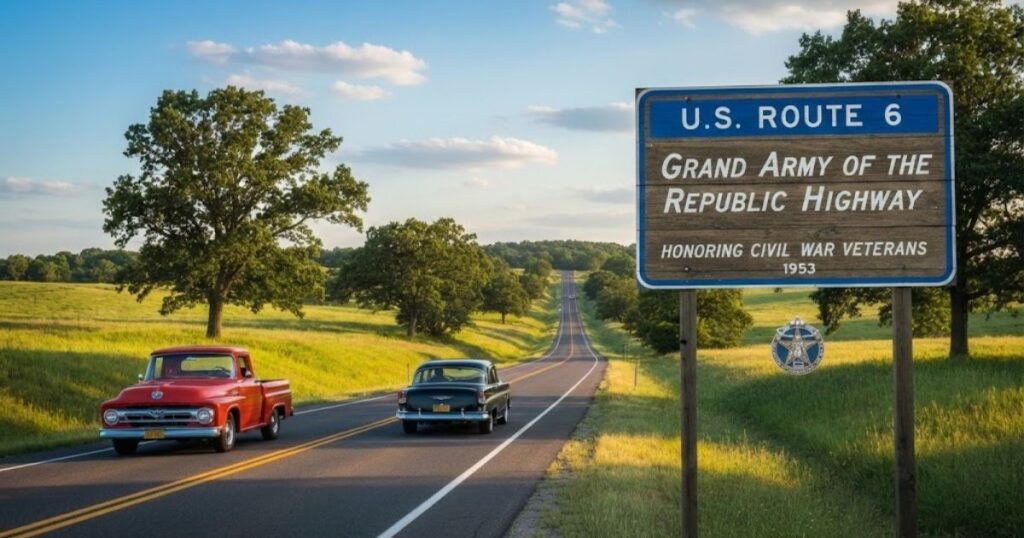
Historic US Route 6 stretches from Provincetown, Massachusetts, to Long Beach, California—an unbroken ribbon of American history that connects small towns, working landscapes, and enduring stories. Among its most meaningful designations is its recognition as the Grand Army of the Republic Highway, a tribute that honors the men who served in the Union Army during the Civil War and the organization that kept their memory alive.
Who Were the Grand Army of the Republic?
The Grand Army of the Republic (GAR) was founded in 1866 as a fraternal organization for Union veterans of the Civil War. At its height, the GAR became one of the most influential veterans’ groups in American history. Beyond camaraderie, it championed pensions for veterans, supported widows and orphans, and helped shape how the nation remembers military service.
One of the GAR’s most lasting contributions was the institutionalization of Memorial Day, originally known as Decoration Day, dedicated to honoring those who died in service to the country. The organization also promoted monuments, memorial halls, and named highways to ensure future generations would not forget the sacrifices made to preserve the Union.
Why US Route 6?
The designation of US Route 6 as the Grand Army of the Republic Highway was intentional and symbolic. Route 6 traverses the heart of the northern United States—regions deeply connected to Civil War history, industrial growth, and westward expansion that followed the war. By linking communities across 14 states, the highway reflects the unity the GAR sought to preserve after a nation-dividing conflict.
Unlike short memorial roads or local byways, Route 6 offers a continental scale of remembrance. It invites travelers to reflect not only on the battles of the 1860s but also on the decades of rebuilding, reconciliation, and civic engagement that followed.
Markers, Monuments, and Memory
Along US Route 6, travelers can still find GAR markers, plaques, and Civil War monuments, particularly in New England and the Midwest. These are often located in town greens, near courthouses, or alongside historic cemeteries where Union veterans were laid to rest.
Many communities along the route once hosted active GAR posts—local chapters that served as social centers and advocacy hubs. While the last Union veteran passed away in 1956, the physical reminders remain, quietly anchoring modern life to a defining chapter of American history.
A Living Classroom on Wheels
Traveling the Grand Army of the Republic Highway today offers more than a scenic drive. It provides a moving classroom where history unfolds mile by mile:
- New England highlights the home front of the Union cause, with historic villages and early enlistment centers.
- The Midwest reflects the agricultural and industrial backbone that sustained the war effort.
- The Great Plains and West reveal how veterans carried their experiences into new settlements, shaping civic institutions and community values.
Each stop reinforces the idea that remembrance is not confined to textbooks—it lives in places, roads, and shared journeys.
Why This Designation Still Matters
In an era of fast travel and digital navigation, the meaning behind named highways can be easy to overlook. The Grand Army of the Republic Highway reminds us that roads are not just infrastructure; they are storylines. This designation encourages travelers to slow down, look closer, and recognize the human sacrifices that helped define the nation.
For Historic US Route 6 advocates and explorers, this legacy aligns perfectly with the mission to preserve, promote, and interpret the route’s cultural significance. Every mile traveled is an opportunity to honor service, reflect on unity, and support the communities that continue to steward this history.
Traveling With Purpose
Exploring US Route 6 as the Grand Army of the Republic Highway transforms a road trip into an act of remembrance. Whether you pause at a small-town monument, visit a local museum, or simply note a historic marker along the way, you participate in a tradition of honoring those who served.
Historic US Route 6 is more than a transcontinental highway—it is a memorial in motion, carrying the legacy of Civil War veterans forward, mile by mile, generation by generation.
U.S. Route 6 was officially recognized as the Grand Army of the Republic Highway (GAR Highway) by all 14 states it traversed in 1953, after Pennsylvania first designated its section in 1948, honoring Civil War veterans and serving as a significant cross-country route before the Interstate system.
Key Dates & Details:
- 1948: Pennsylvania first designated its portion of Route 6 as the GAR Highway.
- 1953: All 14 states officially adopted the name for the entire transcontinental route, with a formal dedication at the Long Beach, CA end on May 3rd.
- Purpose: The name honors the Grand Army of the Republic, an organization of Union Civil War veterans.
- Historical Significance: At its longest (1937-1964), it was the nation’s longest highway, stretching from California to Massachusetts.