Using Facebook Reels to Promote Your Nonprofit
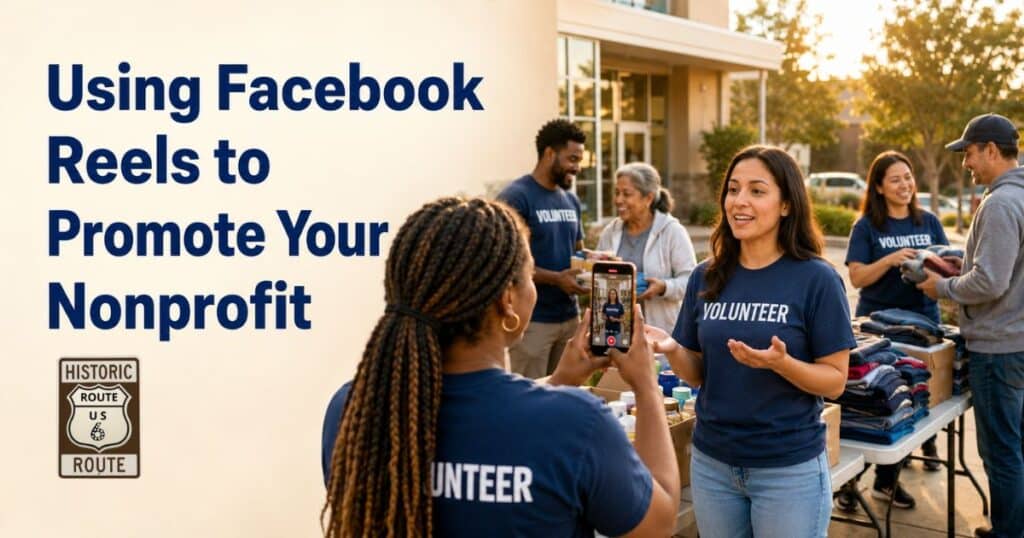
For nonprofit organizations, getting your message in front of more people does not always require a large advertising budget or professional video production. Sometimes, a smartphone, a good story, and less than a minute can introduce your organization to an entirely new audience.
Facebook Reels provide nonprofits with an opportunity to turn everyday activities into short, engaging videos that show people what the organization does and why its mission matters.
The US Route 6 Tourist Association is using Reels to share the people, places, history, communities, and experiences found along Historic US Route 6.
See our Facebook Reels:
US Route 6 Tourist Association Reels
Why Facebook Reels Matter for Nonprofits
Facebook has increasingly centered video around Reels. In 2025, Facebook renamed its Videos tab to the Reels tab and announced a transition toward sharing videos posted to Facebook as Reels. (Facebook)
That makes Reels more than another social media feature. They should be considered part of a nonprofit’s overall Facebook content strategy.
Reels can help an organization:
- Reach people who may not already follow its Facebook Page
- Put a human face on its mission
- Highlight volunteers, supporters, communities, and projects
- Promote events and special programs
- Show progress on preservation or community projects
- Introduce destinations and local businesses
- Encourage people to follow, share, volunteer, subscribe, or donate
- Turn existing photographs and video clips into additional content
Facebook says Reel recommendations are influenced by factors including what people watch, like, comment on, and share. Popular content and a viewer’s previous interactions with creators can also influence recommendations. (Facebook)
For a nonprofit, this creates an important opportunity. A Reel does not necessarily have to begin with an established audience to be discovered.
Tell Stories Instead of Making Commercials
One of the easiest mistakes a nonprofit can make is treating every Reel like an advertisement.
Instead, tell a small story.
Show a volunteer preparing for an event. Take viewers inside a museum. Introduce the owner of a locally owned business. Show the restoration of a historic building. Capture a scenic overlook. Share an interesting historical fact.
For the US Route 6 Tourist Association, a Reel might begin with:
“Did you know this is along Historic US Route 6?”
The next few clips can reveal the location, show what visitors will find there, and finish with an invitation to learn more.
That approach gives viewers something useful before asking them to take action.
Start Strong
People can decide very quickly whether they want to continue watching a video.
The opening should therefore give viewers a reason to stay.
Try opening with a question or statement such as:
“Would you stop here on your next road trip?”
“Here’s something you may not know about Historic US Route 6.”
“Put this museum on your road-trip list.”
“This small town has a story worth discovering.”
Then immediately show the place, person, activity, or object that makes the story interesting.
Make Reels Easy to Watch
You do not need expensive equipment.
A modern smartphone can produce excellent video for Facebook. Concentrate on steady footage, good lighting, clear audio, and an interesting subject.
When creating content specifically for Reels, vertical video remains an excellent choice. Meta’s guidance for Reels advertising specifically recommends 9:16 video, audio, and keeping important creative elements within the video’s safe zone. (Facebook)
Text on the screen can also help identify a destination or explain what viewers are seeing.
Keep important text short and readable.
Instead of:
“The History of This Fascinating Community Along the Grand Army of the Republic Highway”
try:
“Discover Helper, Utah”
Then use the video and accompanying description to tell the rest of the story.
Turn One Visit Into Several Reels
A nonprofit does not have to constantly search for new material.
Suppose volunteers visit a museum along Historic US Route 6. That single visit could produce several Reels:
- A quick exterior introduction.
- Three exhibits visitors should not miss.
- A short interview with a museum representative.
- An interesting historical fact.
- A behind-the-scenes look.
- A “Would You Stop Here?” travel Reel.
- A Reel explaining the museum’s connection with Historic US Route 6.
This approach creates a library of useful content without requiring seven separate trips.
Show the People Behind the Organization
Nonprofits are ultimately about people.
Introduce your volunteers. Talk with community leaders. Feature historians, museum staff members, business owners, travelers, donors, and supporters.
These videos do not need to be complicated interviews.
Ask one question:
“Why is preserving this history important?”
or:
“What should visitors see when they come here?”
A short answer can become the centerpiece of an effective Reel.
Give Every Reel a Purpose
Before publishing, decide what you want the viewer to do next.
The call to action might be:
Follow our Page.
Share this Reel.
Visit this community.
Read the full story.
Subscribe to our newsletter.
Become a volunteer.
Support the organization.
Facebook allows descriptions and hashtags to be added when publishing Reels, which can provide additional context and help people discover relevant content through search. (Facebook)
Avoid trying to accomplish everything with one Reel. One clear objective is usually stronger than several competing requests.
Reels Can Support Fundraising Without Always Asking for Money
Fundraising remains important for many nonprofit organizations, and Facebook continues to provide fundraising resources for eligible nonprofit and charitable organizations. (Facebook)
But fundraising content does not always have to say, “Please donate.”
A Reel showing volunteers working on a project demonstrates impact.
A historic site being preserved demonstrates need.
A community benefiting from tourism demonstrates value.
An interview with someone who has benefited from the organization’s work provides a human story.
When people understand what an organization accomplishes, a future request for financial support has considerably more context.
Create a Simple Reels Schedule
Consistency is more useful than trying to produce a large number of videos at once and then disappearing.
A nonprofit could begin with just one Reel each week.
For the US Route 6 Tourist Association, a simple rotation might include:
Week 1: Location of Interest
Week 2: Historic US Route 6 history
Week 3: Community Spotlight
Week 4: Behind the scenes with the Association
The following month, repeat the basic structure with different locations and stories.
That provides consistency while leaving plenty of room for events, breaking news, seasonal travel, and unexpected discoveries.
Repurpose Content You Already Have
Look through your organization’s existing content before deciding you do not have enough material for Reels.
You may already have years of photographs, event videos, interviews, historical images, blog posts, newsletters, presentations, and volunteer photographs.
A blog post can become a Reel.
A group of photographs can become a short visual story.
An old newsletter article can provide the script for a new video.
A Location of Interest article can become a 30-second introduction encouraging viewers to read the complete story.
The goal is not necessarily to create more information. It is to present information you already have in a format that today’s Facebook audience can quickly discover and consume.
Watch What Works
Do not assume you know which videos your audience will prefer.
Experiment.
Try history, scenery, interviews, museums, communities, behind-the-scenes clips, events, preservation stories, and quick travel tips.
Then compare the response.
Look at views, comments, shares, and other engagement. More importantly, look for patterns.
If viewers repeatedly respond to historic photographs, produce more history Reels. If small-town destinations receive strong engagement, expand that series. If volunteers generate comments and shares, introduce more of the people behind the organization.
Let your audience help shape what you produce next.
See How We’re Using Facebook Reels
The US Route 6 Tourist Association is continuing to explore how short-form video can help tell the story of America’s historic Grand Army of the Republic Highway.
Our Reels can highlight destinations, communities, history, attractions, preservation, and the people who keep the story of Historic US Route 6 alive.
Take a look at what we’re publishing:
Watch the US Route 6 Tourist Association Facebook Reels
While you’re there, follow the Page, watch a few Reels, and share one with someone who enjoys road trips, American history, or discovering places beyond the Interstate.
For nonprofits, Facebook Reels offer something especially valuable: a way to transform small moments into stories that can introduce a much larger audience to your mission.
The next person who becomes a follower, volunteer, subscriber, visitor, supporter, or donor might first discover your organization through a video recorded on a phone.
Sometimes all it takes is one good story.
Visit the US Route 6 Tourist Association
Subscribe today and let Route 6 come to you, one story at a time.
FOLLOW US


