US Route 6 Revival
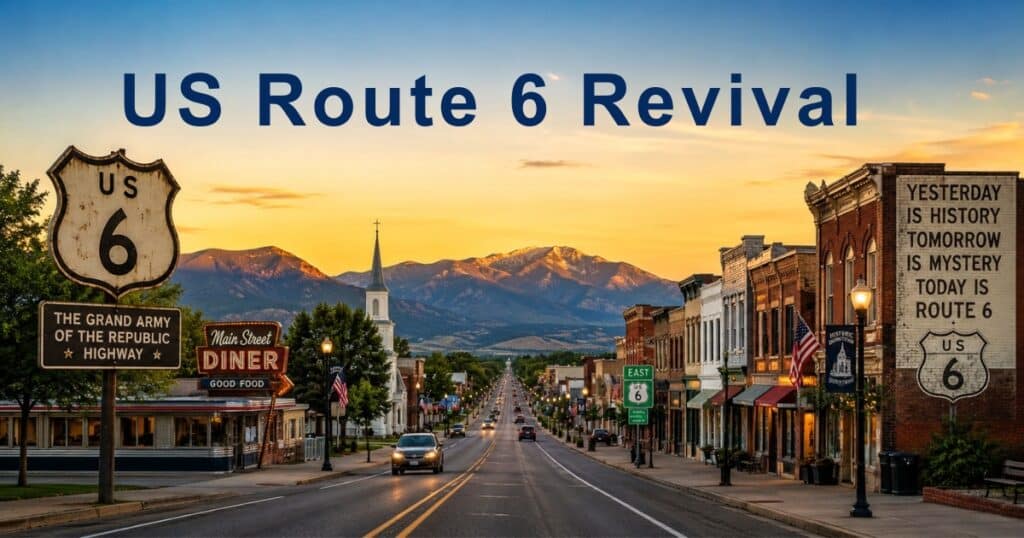
Preserving the Legacy of Historic US Route 6
There are highways that move people from one place to another, and then there are highways that carry stories.
US Route 6 Tourist Association understands that better than most. Through its growing “US Route 6 Revival” campaign, the organization is doing far more than encouraging travelers to take the scenic route. It is helping preserve the spirit of one of America’s most historic roads while protecting the communities, landmarks, and memories that still line its pavement.
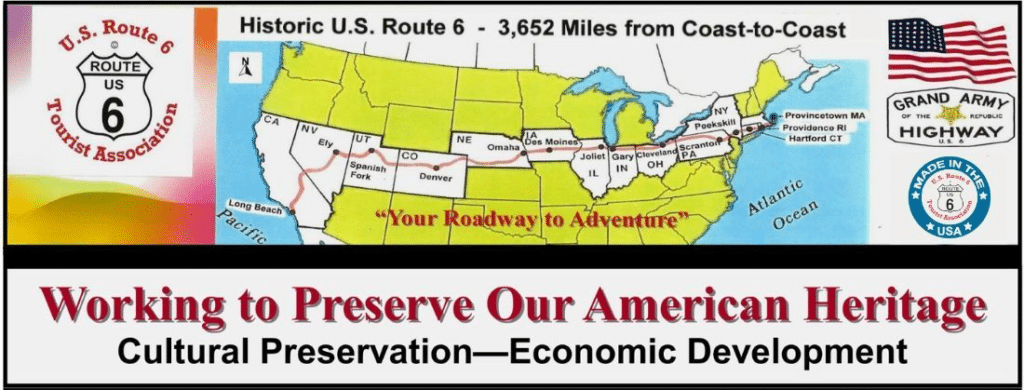
Stretching from the harbors of Provincetown to the west coast at Long Beach, US Route 6 once stood as the longest highway in America. Known as the Grand Army of the Republic Highway, it became a ribbon connecting mining towns, farming communities, industrial cities, mountain passes, diners, rail depots, and coastal villages. For decades, families loaded station wagons, truckers crossed the continent, and dreamers chased horizons along its route.
But like many historic roads, portions of US Route 6 faded from national attention when the interstate system changed how America traveled.
The US Route 6 Revival campaign is helping change that.
Instead of allowing the highway’s heritage to disappear into forgotten maps and abandoned roadside signs, the campaign is bringing new energy to communities determined to keep the route alive for future generations.
One of the most visible efforts involves historic signage restoration and placement. Travelers who follow older alignments of US Route 6 increasingly encounter heritage route markers and interpretive signs that reconnect modern drivers with the original roadway. These markers are more than navigation tools. They act as reminders that history still exists beyond the interstate exit ramp.
In small towns across states like Pennsylvania, Colorado, Nebraska, and California, local partnerships are also helping restore awareness of historic depots, downtown business districts, museums, vintage motels, and cultural landmarks tied directly to US Route 6. The campaign encourages communities to see these places not as relics of the past, but as living assets capable of attracting tourism, strengthening civic pride, and supporting local economies.
That preservation effort often begins with storytelling.
A restored theater means little if nobody remembers why it mattered. A surviving roadside diner becomes even more meaningful when travelers understand the generations of conversations that once filled its booths. US Route 6 Revival thrives because it connects physical preservation with human memory.
The campaign also recognizes that preservation without protection can only go so far.
Across America, historic roads face constant pressure from unchecked development, infrastructure neglect, and changing transportation priorities. Segments of older highways can vanish quietly under widening projects or commercial expansion. US Route 6 Revival works to encourage scenic recognition efforts, support maintenance awareness, and advocate for thoughtful development that respects the historic character of communities along the route.
That approach does not reject progress. Instead, it argues that modernization and heritage can coexist.
A traveler driving through a preserved downtown district experiences something an interstate bypass can never offer: authenticity. Brick storefronts, historic rail stations, old neon signs, local cafés, and courthouse squares create a sense of continuity between past and present. Protecting those spaces helps preserve the identity of the towns themselves.
I remember driving a stretch of US Route 6 through the high country years ago, watching late afternoon sunlight spill across weathered buildings that had clearly witnessed generations of travelers come and go. The gas stations were fewer. Some motels stood empty. Yet there was still life there. A local café buzzed with conversation. An aging Route 6 sign leaned slightly in the wind beside the road. It felt less like a forgotten highway and more like a chapter of America patiently waiting to be reread.
That feeling is exactly what the US Route 6 Revival campaign hopes more people will discover.
Creating awareness has become one of the campaign’s strongest tools. Through newsletters, community spotlights, annual gatherings, historical features, digital archives, and social media storytelling, the campaign continually introduces new audiences to the significance of US Route 6. Travelers who may never have heard of the highway suddenly find themselves learning about mountain mining towns in Nevada, harbor communities in Massachusetts, or agricultural communities in Iowa connected by a single historic roadway.
The rise of digital storytelling has proven especially important.
Historic preservation once depended heavily on guidebooks, local tourism offices, and word of mouth. Today, awareness campaigns can reach readers worldwide within moments. US Route 6 Revival uses that advantage to showcase overlooked destinations, seasonal events, roadside attractions, and preservation projects through articles, photography, interviews, and online outreach.
Each shared image of a restored theater, each story about a historic bridge, and each feature highlighting a small town along US Route 6 becomes part of a larger effort to ensure the road remains culturally relevant.
The campaign’s success ultimately comes from its grassroots nature.
This is not simply about preserving asphalt. It is about preserving identity.
US Route 6 passes through fourteen states, yet it belongs to countless local communities that continue fighting to keep their stories visible. Volunteers organize clean up efforts. Historians document fading landmarks. Business owners keep vintage signs illuminated. Travelers share photographs and memories online. Local museums preserve archives that might otherwise disappear.
Together, those actions form the heart of US Route 6 Revival.
In many ways, the campaign reflects a growing national realization that historic highways still matter. They remind Americans that travel was once about discovery rather than speed alone. They encourage people to slow down, explore overlooked communities, and appreciate the landscapes between major destinations.
US Route 6 is not frozen in time. It is evolving again.
The US Route 6 Revival campaign proves that preservation is not merely about looking backward. It is about ensuring future generations can still experience the character, stories, and connections that made roads like US Route 6 legendary in the first place.
The next time you see a US Route 6 marker, consider taking the turn instead of the bypass.
Drive through the small towns. Stop at the local diner. Visit the museum. Share the stories. Support the communities keeping the highway alive.
Because every mile preserved today helps ensure the Grand Army of the Republic Highway continues inspiring travelers tomorrow.
Subscribe today and let Route 6 come to you, one story at a time.