Denver Union Station and the Living Legacy of US Route 6
Few places along the path of historic US Route 6 capture the spirit of travel, connection, and reinvention quite like Denver Union Station. Standing proudly in the heart of downtown Denver, this beautifully restored landmark is far more than a train station. It is a gathering place, a cultural icon, a dining destination, and a reminder that great American journeys have always been about more than simply getting from one point to another.
For travelers exploring the heritage of US Route 6, Denver Union Station represents an important crossroads in both transportation and Western history. Its recent feature on the US Route 6 Tourist Association homepage highlights its continued significance as one of the most recognizable and welcoming landmarks along the route.
A Historic Gateway to the West
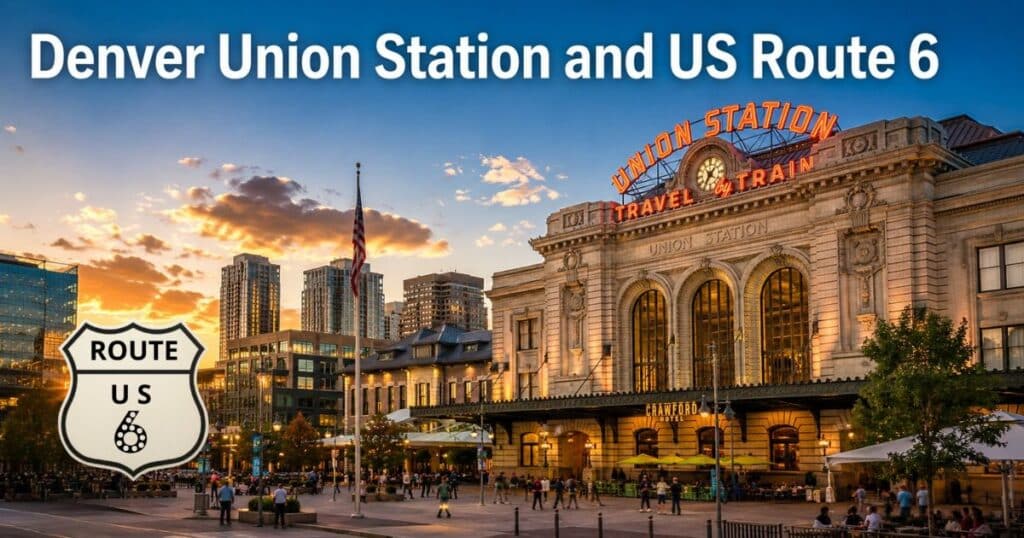
Denver Union Station originally opened in 1881, serving as a central hub for rail passengers arriving in the rapidly growing city of Denver. After a devastating fire in 1894, much of the station was rebuilt, leading to the structure visitors recognize today. The station’s famous illuminated “Travel by Train” sign has become one of Denver’s most photographed landmarks.
Architecturally, Denver Union Station reflects the Beaux Arts and Romanesque Revival styles popular during the late nineteenth and early twentieth centuries. The building’s grand stone exterior, towering arched windows, ornamental detailing, and elegant symmetry give it a timeless presence that immediately evokes the golden age of rail travel.
Walking toward the station today, visitors are greeted by a structure that feels both monumental and inviting. The cream colored façade glows warmly in the Colorado sunlight, while the large central clock tower creates a sense of arrival that modern transportation terminals often lack.
The Great Hall Experience
The true heart of Denver Union Station is its celebrated Great Hall. Stepping inside feels like entering a living museum where history and contemporary culture exist side by side.
High ceilings, rich wood accents, vintage chandeliers, and oversized leather seating areas create an atmosphere that encourages visitors to slow down and enjoy the surroundings. The room hums with activity throughout the day. Travelers sip coffee while waiting for trains. Locals meet friends for lunch. Visitors pause to admire the architecture or simply soak in the atmosphere.
Unlike many historic stations that became frozen in time, Denver Union Station successfully reinvented itself for the modern era while preserving its historic character. The station underwent a major renovation and restoration completed in 2014, transforming it into one of the nation’s most admired adaptive reuse projects.
Today, the station includes:
- Boutique shops
- Restaurants and cocktail lounges
- A luxury hotel
- Public gathering spaces
- Outdoor plazas
- Transit connections for rail, buses, and airport service
The restoration carefully balanced preservation with modernization. Original architectural elements were retained whenever possible, while updated infrastructure ensured the building could serve contemporary travelers for decades to come.
More Than a Transit Hub
What makes Denver Union Station especially remarkable is that people visit even when they are not catching a train.
That distinction matters.
Many transportation centers exist purely for function. Denver Union Station has evolved into a true civic destination. On any given day, the station hosts business meetings, weddings, family outings, and community events. During the holidays, the Great Hall glows with seasonal decorations and bustling energy. In warmer months, the surrounding plaza fills with outdoor diners and travelers beginning new adventures across Colorado and beyond.
Its role as a social gathering place reflects the same spirit that once defined the classic American highway experience. Historic roads like US Route 6 were never just about pavement and mileage. They connected communities, encouraged discovery, and created memorable encounters along the journey.
Denver Union Station continues that tradition in a modern setting.
The Connection to US Route 6
The story of US Route 6 is deeply woven into America’s transportation history. Established in 1926 as part of the original United States Numbered Highway System, US Route 6 eventually stretched from Provincetown to Long Beach, becoming the longest highway in the nation for a time. Known as the Grand Army of the Republic Highway, the route linked small towns, industrial cities, mountain communities, deserts, and coastal regions across America.
Denver became an important waypoint for travelers navigating the western portion of the route. The city represented both a gateway to the Rocky Mountains and a major transportation center connecting rail and highway travel.
The feature of Denver Union Station on the US Route 6 Tourist Association homepage reflects the station’s enduring importance as a symbol of American mobility and historic preservation. It also reinforces the Association’s broader mission to celebrate locations that embody the culture and heritage of the historic highway.
For travelers following US Route 6 today, Union Station offers a chance to experience living history in an authentic and accessible way.
Architecture That Rewards Attention
One of the joys of visiting Denver Union Station is noticing the smaller details that many travelers might initially overlook.
The carefully restored woodwork inside the Great Hall. The polished brass fixtures. The elegant window designs that flood the interior with natural light. The contrast between historic masonry and sleek modern transit platforms.
Even the acoustics contribute to the experience. Conversations echo softly beneath the tall ceilings while the distant sounds of arriving trains create a subtle reminder that the station still fulfills its original purpose.
Outside, the surrounding LoDo district complements the station beautifully. Historic brick warehouses, lively restaurants, and walkable streets help create an environment where visitors can easily spend an entire afternoon exploring.
Why Union Station Matters
Historic landmarks survive when communities recognize their value and invest in preserving them. Denver Union Station stands as one of the finest examples of how preservation can succeed without sacrificing relevance.
Rather than becoming obsolete, the station adapted.
Rather than losing its identity, it strengthened it.
That success makes the station especially meaningful for those interested in preserving the heritage of US Route 6 and other historic transportation corridors across America. Places like Denver Union Station remind us that travel experiences can still feel personal, memorable, and deeply connected to history.
For anyone exploring Colorado or tracing the legacy of the Grand Army of the Republic Highway, Denver Union Station deserves more than a quick stop. Sit in the Great Hall for a while. Watch travelers come and go. Enjoy a meal. Study the architecture. Feel the energy of a landmark that continues to evolve while honoring its past.
That is what makes Denver Union Station more than a transit point.
It is a destination in every sense of the word.
Subscribe today and let Route 6 come to you, one story at a time.